One blind, two very different jobs
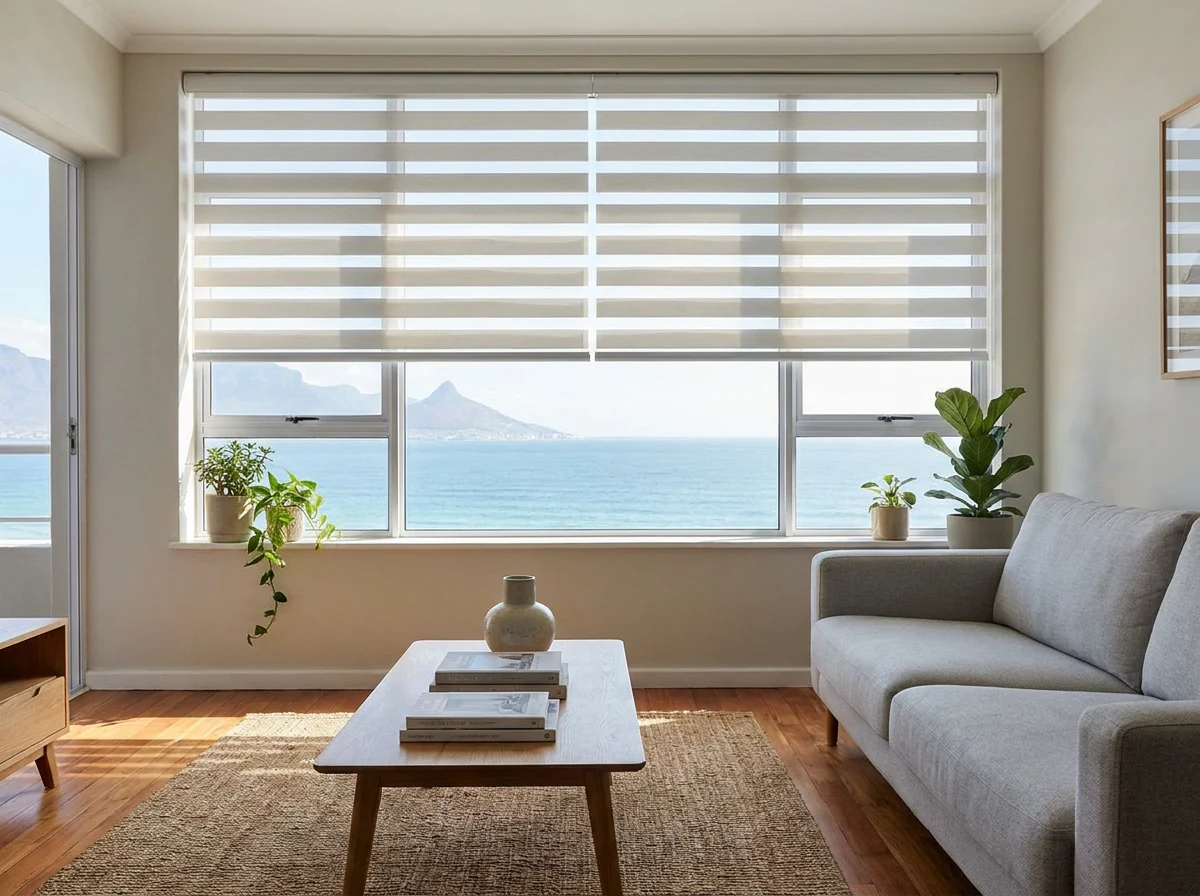
Align the sheer and solid bands and the room gets filtered light with a soft view — useful through the day when the promenade below is busy with joggers and dog walkers and a fully open blind feels too exposed. Offset the bands and coverage runs close to solid without lowering the blind fully, which is the difference on a lower-floor unit where the pavement runs a few metres from the glass. It's one mechanism doing the job that used to need a sheer curtain and a separate blind.
Where it earns its place in this apartment stock
Mouille Point's lower units sit closer to street level and foot traffic than the top-floor apartments with the clean line to Robben Island, and day/night blinds are the product we reach for most often on those street-facing or promenade-facing windows. The older walk-up blocks in Sea Point ask us the same thing, for the plain reason that a low floor there sits much closer to the pavement than anything in the towers beside it. It's also a strong pick for a living room that wants the light on through the day without the room feeling like a display case to anyone walking past. A park-side flat in Green Point brings us that brief too: a lounge facing a public park is facing whoever happens to be in it.
Honest about what it isn't
Even fully offset, a day/night blind isn't true blockout — light still seeps at the band edges, which matters for a bedroom that needs proper dark rather than dim. For those rooms we'd usually specify a blockout or double roller instead, and say so at the measure rather than let a zebra blind under-deliver on a job it was never built for.
Where the pricing sits
R1,300 to R2,000 buys a square metre of chain-driven day and night blind, fitted, with a plain band and an open sheer toward the first number and a cassette over a semi-blockout band toward the second. Motorised, R2,800 to R4,000 buys that square metre — motor, control and commissioning included.
Small openings bill at a minimum, since the hardware and the access arrangements do not shrink with the glass. The spread is for planning; every window is measured, costed separately and confirmed on paper before manufacture.
- Alternating sheer and solid horizontal bands on one loop
- Light-filtering to semi-blockout fabric ranges
- Chain or battery-motorised control, cassette options
- Not true blockout — bedrooms wanting full dark want a blockout roller instead
Street-facing window feeling too exposed?
No obligation: the in-home measure is free and the quote is written up window by window.