No. 01
Sunscreen Roller Blinds
A fine mesh that holds the Robben Island view while cutting the glare bounced off Table Bay.
Explore →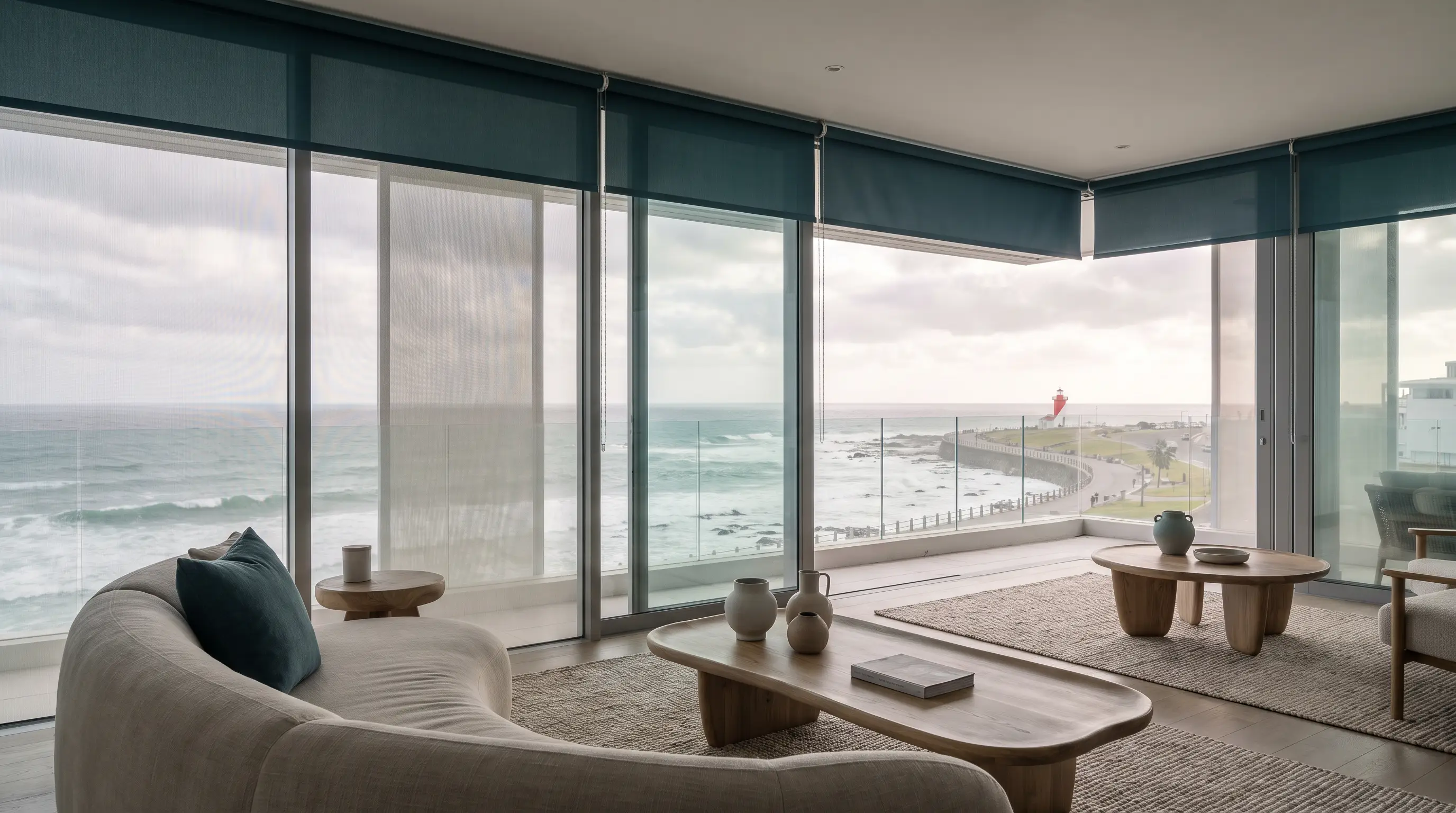
Made-to-measure blinds, motorised exterior shading and salt-air-rated hardware for Mouille Point's sea-facing apartments — measured on site, fitted by our own team, cleared with your body corporate before a single bracket goes in.
Mouille Point's apartment blocks run low-rise and close to the water, so a sea-facing lounge and a street-facing bedroom rarely want the same product. Twelve ways to spec it, made to measure for the opening in front of you — and cleared with your body corporate before anything is ordered.
A fine mesh that holds the Robben Island view while cutting the glare bounced off Table Bay.
Explore →
Total dark for bedrooms, or blockout and sunscreen on one bracket — the view by day, privacy after dark.
Explore →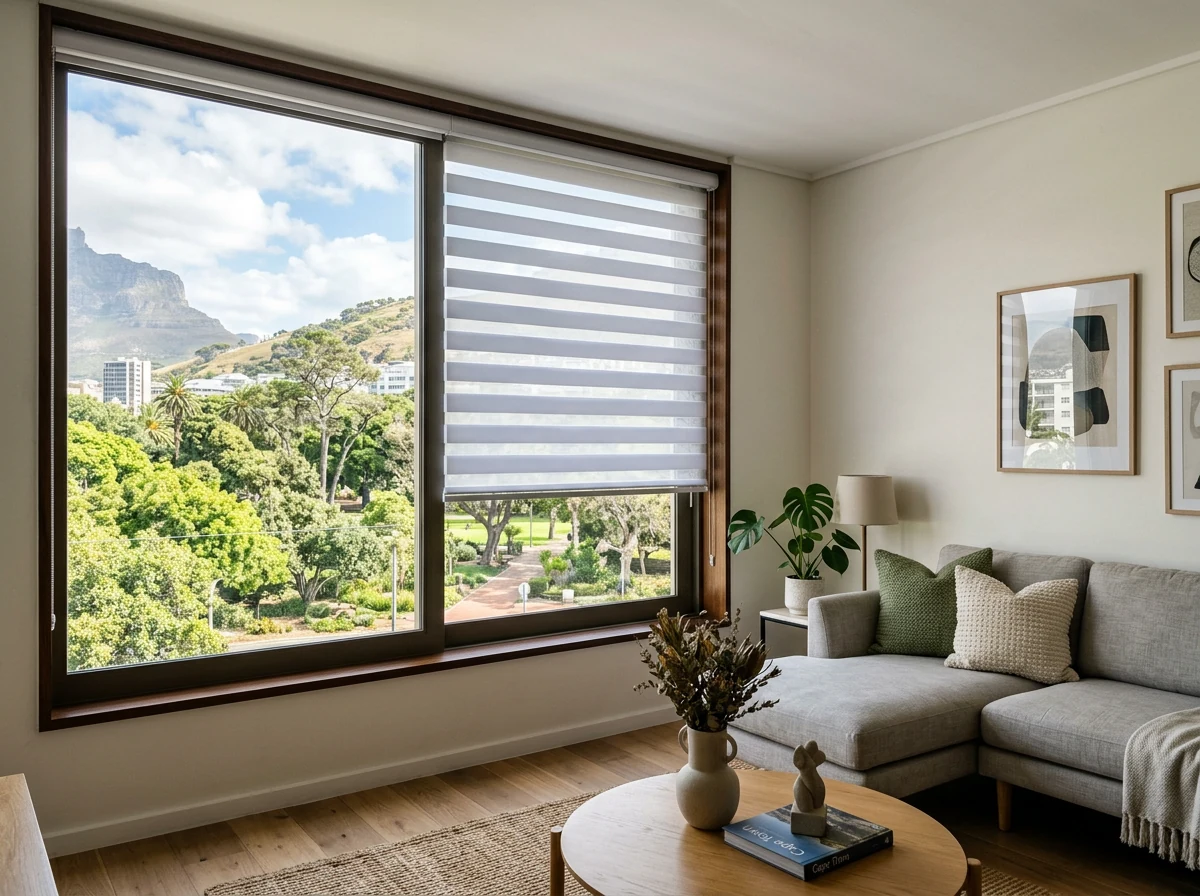
Privacy from the promenade below without losing the light — tuned band by band.
Explore →
Slim, sealed-finish slats that shrug off salt air far better than fabric.
Ask about this →
Hexagonal air cells insulate a sea-facing room that runs cold once the sun drops.
Ask about this →
Wide vanes that tilt or draw clear across the sliding doors typical of this apartment stock.
Ask about this →
Fabric drops from a hidden slot — raised, the window shows nothing but glass and the bay.
Ask about this →
Made to the actual opening, not trimmed to fit — for the odd window nobody else quotes.
Ask about this →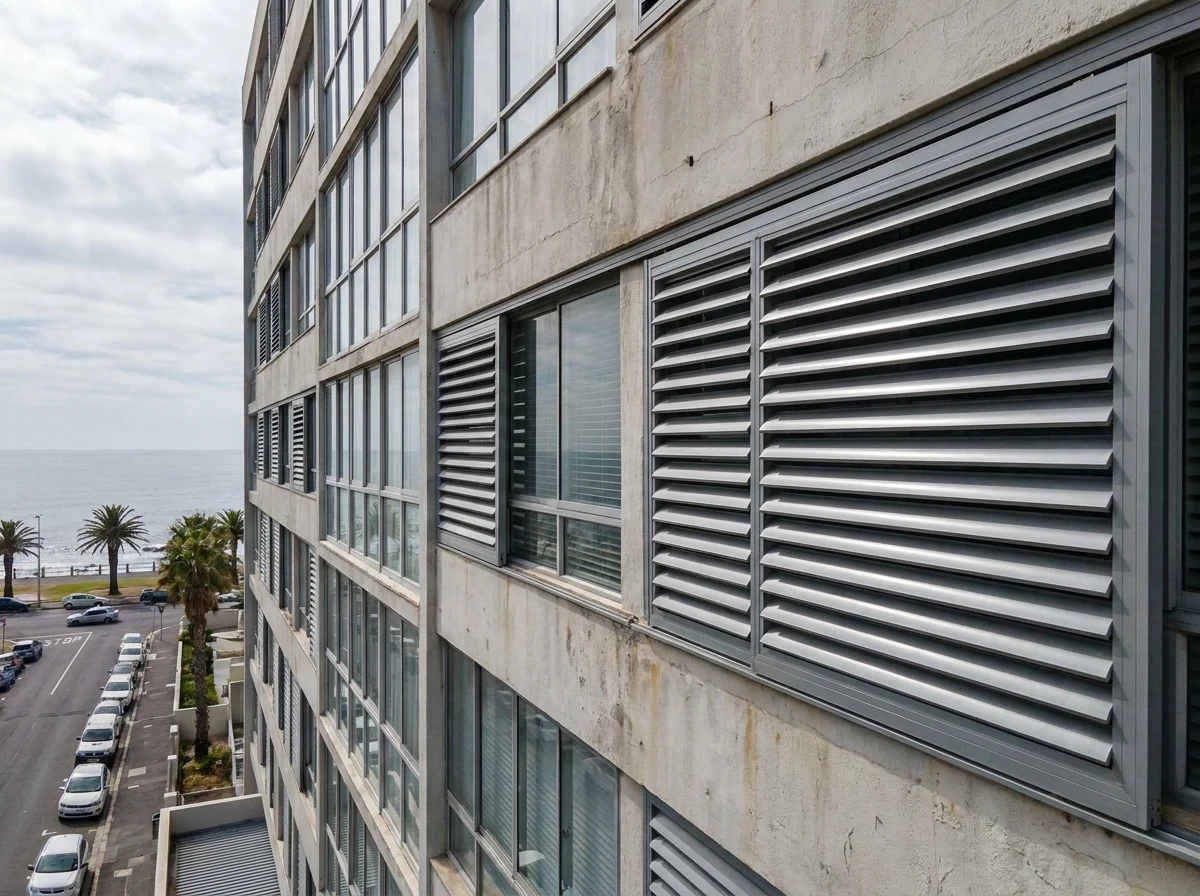
Stops the heat outside the glass, ahead of anything indoors.
Ask about this →
Full external sun, glare and privacy control, closed from outside the glass. Shading, not security.
Ask about this →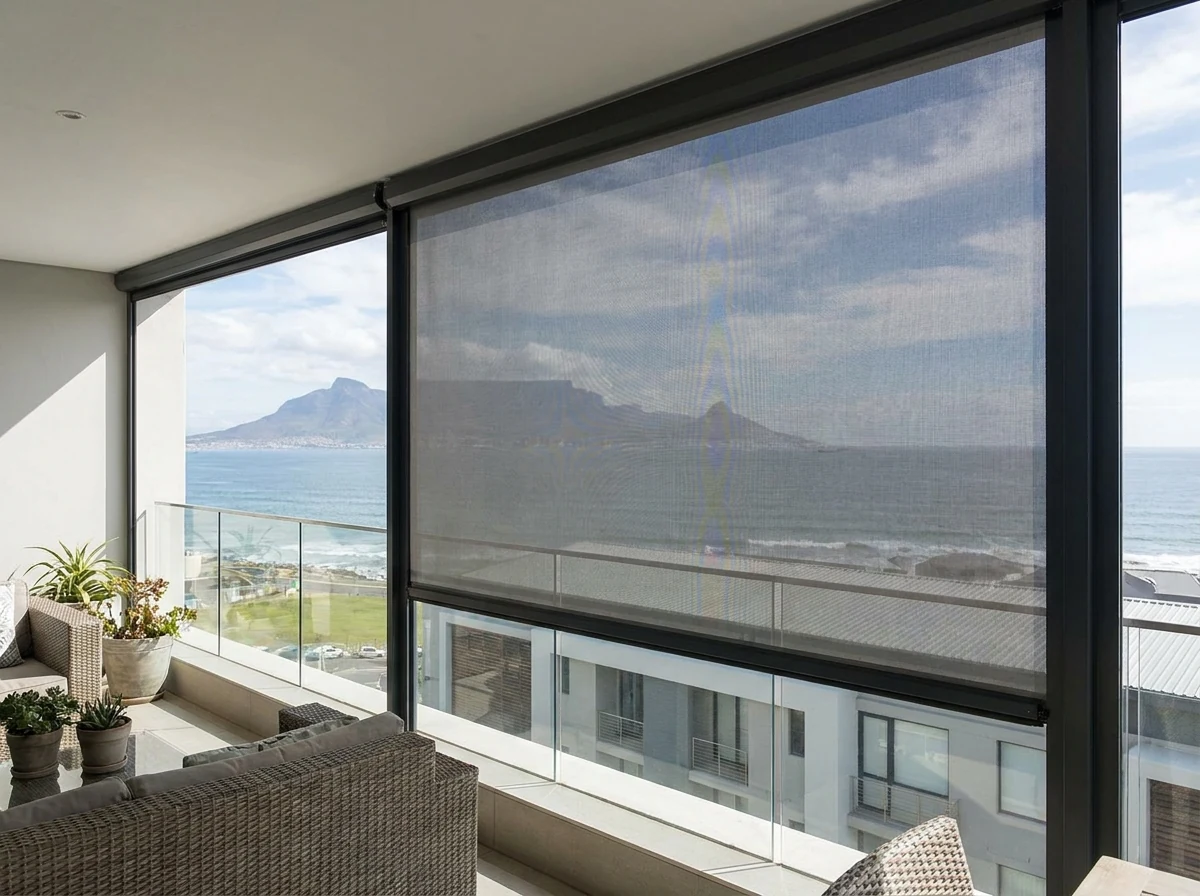
Zipped side channels hold the mesh taut against wind straight off Table Bay.
Explore →
One remote for a whole glass wall, and a wind sensor that protects what's outside before the gust arrives.
Explore →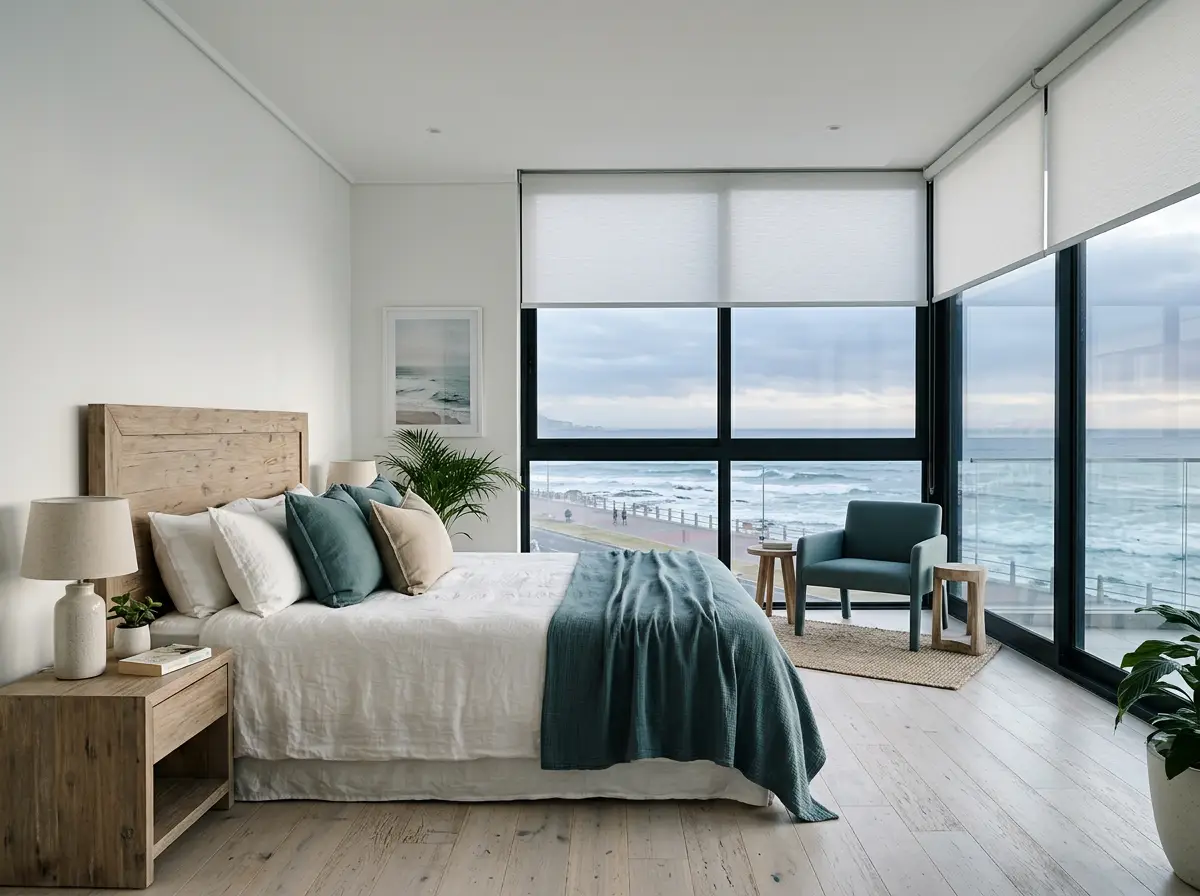
A sea-facing lounge needs the Robben Island view without the afternoon glare bouncing off the water. A street-facing bedroom needs proper dark, whatever the promenade below is doing. A balcony needs shade that survives a gust off Table Bay without flapping loose. Each of those windows gets its own answer in writing, from one consultant on one visit.
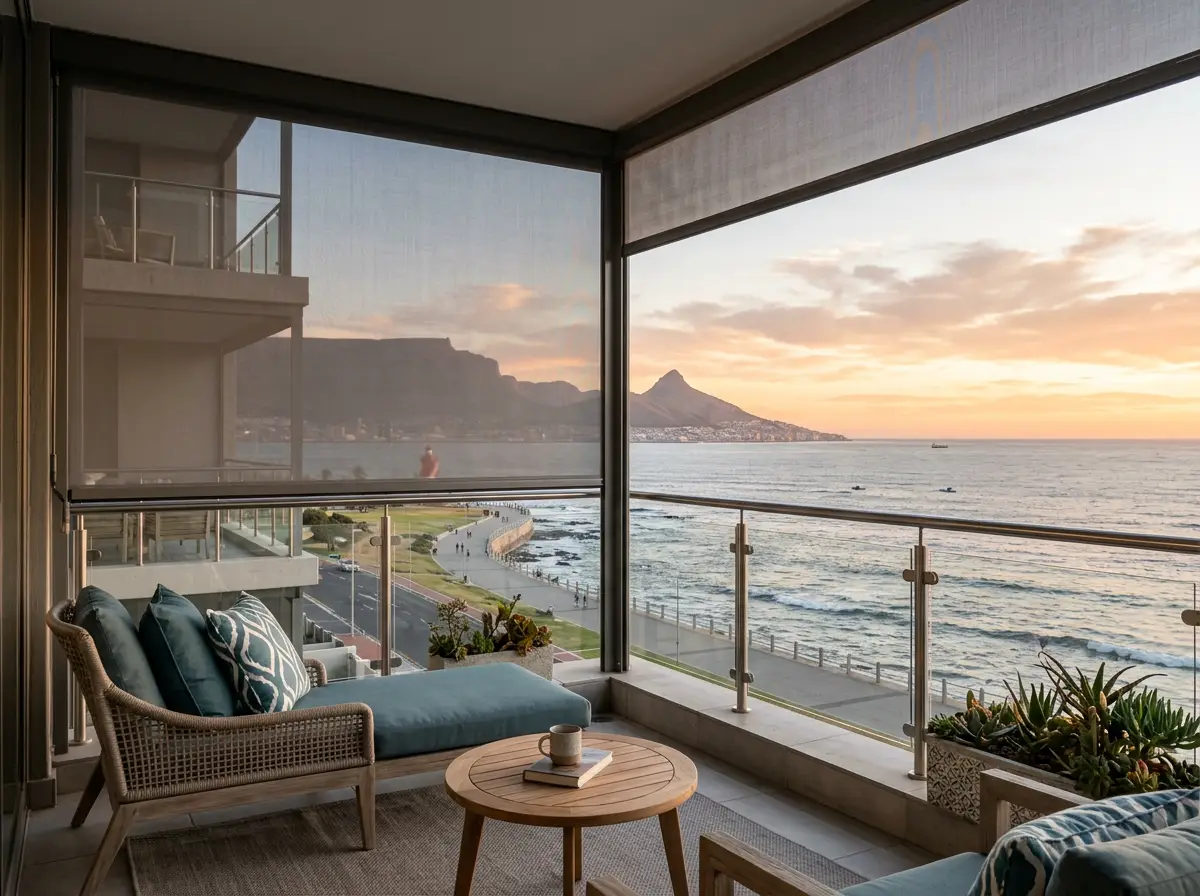
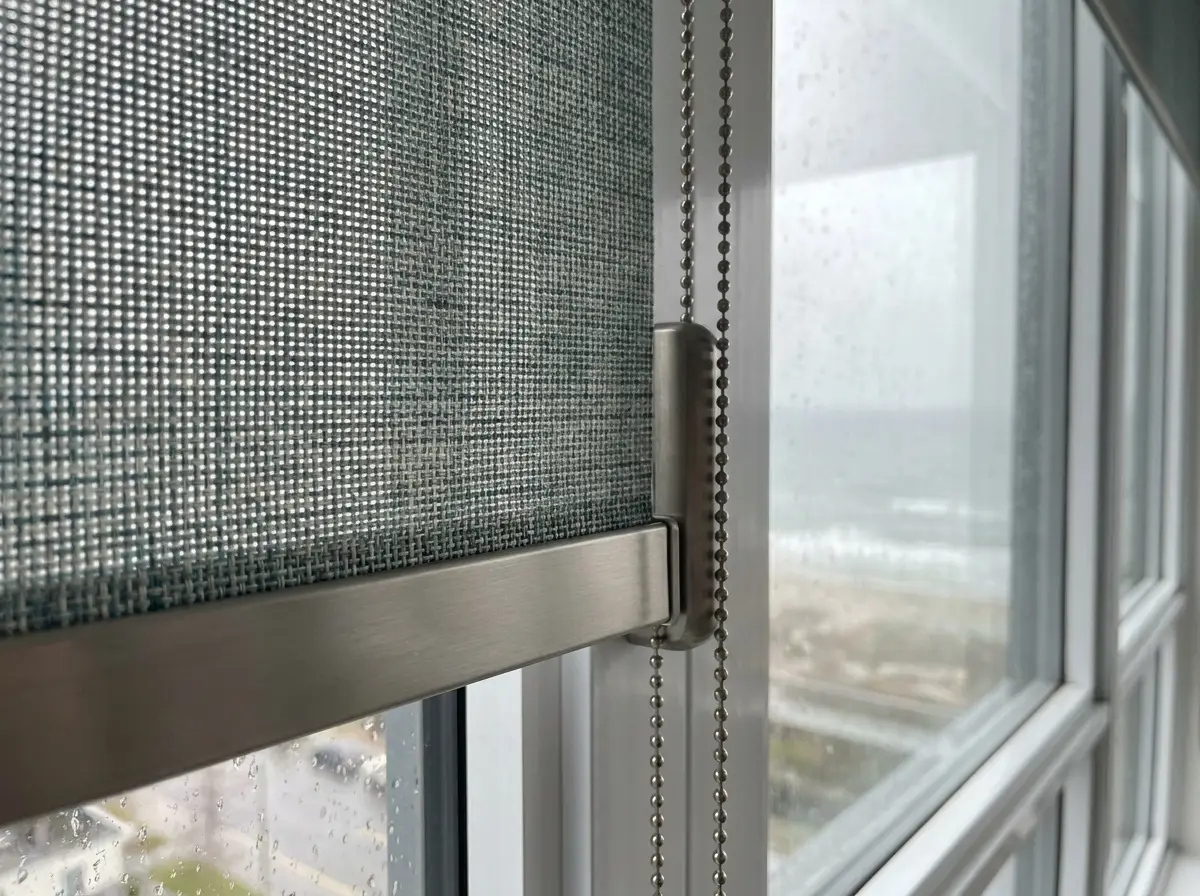
Powder-coated, seaside-rated aluminium on anything mounted outside, sealed cassettes rather than open brackets, chain and cord tensioners fitted as standard, and battery motorisation wherever a retrofit into an existing apartment makes more sense than chasing walls for wiring. Even the best hardware wants an occasional fresh-water rinse this close to the water — we say so rather than call anything maintenance-free.
Mouille Point runs along a short stretch of reclaimed shoreline between the V&A Waterfront and Green Point, its promenade curving past the Green Point Lighthouse — built in 1824 and still the working light guiding ships past this stretch of Table Bay. Unlike the high-rise wall further south at Sea Point, most of Mouille Point's apartment blocks sit low and wide, three to six storeys, laid out so a good number of sea-facing units hold a clean line across the water to Robben Island. The trade-off for that low-rise scale is exposure: nothing about the terrain here breaks the wind or softens the glare — the promenade is flat, open, and about as close to Table Bay as a building can legally sit.
That openness cuts both ways at the window. Summer brings the south-easter funnelling along the coast from Sea Point; winter brings the north-westerly storms that roll in off open water with nothing between them and the glass. Add the salt spray that reaches balconies on a windy day and any exterior fitting here needs genuinely marine-grade hardware, not a fair-weather spec. Because the entire strip is sectional title, almost every exterior job — an awning, a zip screen, a roller shutter box, even a fascia colour — needs sign-off from a body corporate or managing agent before it goes in; we ask about your building's rules on the first call rather than discovering them at install.
Tell us the rooms, the products you're considering, and which building you're in. The form or the chat takes about two minutes.
A consultant comes to you, measures every opening on site, checks salt exposure and your building's rules, and brings fabric samples.
Every window itemised, with the lead time written in from the start, so what you pay matches what you were shown.
Every piece is manufactured to your measurements and installed cleanly by our own team, lift access and sign-in arranged in advance.
On cost, up front rather than at the end: R1,000 to R7,500 buys a square metre of shading on this stretch, fitted, decided by the product and by whether it is motorised. Small openings bill at a minimum, and the figure for each of yours follows the free measure on paper.
Mouille Point Blinds measures, makes and fits window and balcony shading along this stretch of the Atlantic Seaboard — Mouille Point itself, Green Point, Sea Point, Fresnaye and Bantry Bay. Roller blinds, day and night blinds, zip screens and motorised control are built to the sizes taken at your own openings, and specified for salt exposure as a matter of course rather than as an extra line at the end.
The route through a job never varies. You send the form or use the chat, and one of our expert consultants will contact you shortly to arrange a free in-home measure. That visit checks the exposure and your building’s rules as carefully as it measures the glass, and fabric, openness and control get settled room by room. A written quote follows with each window itemised and lead times stated, and nothing is manufactured until you have approved it. Then it is made to those measurements and fitted by our own team, with lift access and sign-in arranged beforehand.
The details you send are used only to arrange that call-back and are handled under POPIA.
The same free-measure, written-quote process, adjusted for what each building and each body corporate actually needs.
Yes — Mouille Point is our home ground, and we measure and fit across Green Point, Sea Point, Fresnaye and Bantry Bay too. Sitting just beyond that list? Put the address on the enquiry form and we'll confirm either way.
Almost always, on a sectional-title building. Awnings, zip screens, roller shutters and anything visible from outside typically need sign-off from your body corporate or managing agent before it's fitted. We ask about your building's specific rules on the first call so it's part of the timeline, not a delay discovered at install.
Cheap hardware corrodes fast this close to the water — pitted brackets and seized chains within a season or two. We specify powder-coated, seaside-rated aluminium and sealed cassettes on anything mounted outside. Even that hardware benefits from an occasional fresh-water rinse — we won't tell you it's maintenance-free.
In order of effect: exterior shading such as external venetians, roller shutters or a zip screen on the balcony (stops heat and glare at the glass), sunscreen or day-night blinds inside (cuts the load while keeping the view), and motorisation so it happens on schedule whether you're home or out on the promenade.
Any blind that runs on a cord or a chain gets a tensioner fitted as part of the job. In a nursery or a child's room we would usually point you at wand-tilt, cordless or motorised operation instead; mention it to your consultant and it goes into the quote.
None at all. Nothing is charged for the visit, the samples, the consultation or the written per-window quote, and you are under no obligation to order afterwards.
Free in-home measure, a written per-window quote, and a consultant who already knows how to work with a body corporate.
Give us a sense of the rooms involved and which products you have in mind. One of our expert consultants will contact you shortly to arrange your free in-home measure.